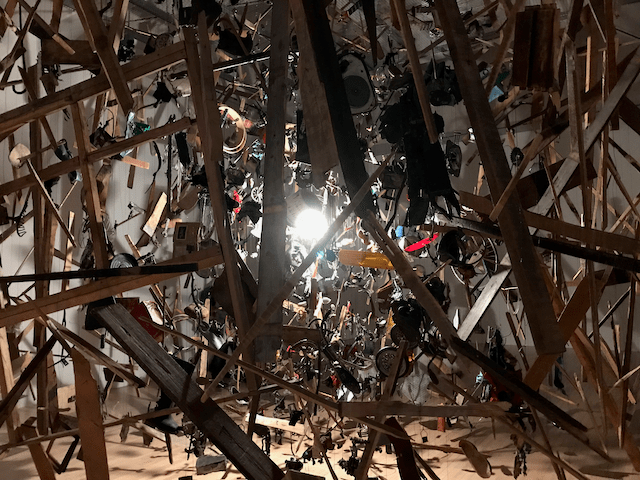
The only Cornelia Parker piece that I’d actually seen before this was PsychoBarn which was in the courtyard of the Royal Academy for a while. However, I’d seen programmes about her and here “exploded shed” piece in particular which looked amazing…I was really keen to see it in person.
COVID restrictions are more relaxed at the galleries now so I didn’t even have to book in advance (I have a membership for the Tate). My daughter and I headed off early on a half term holiday for a look.

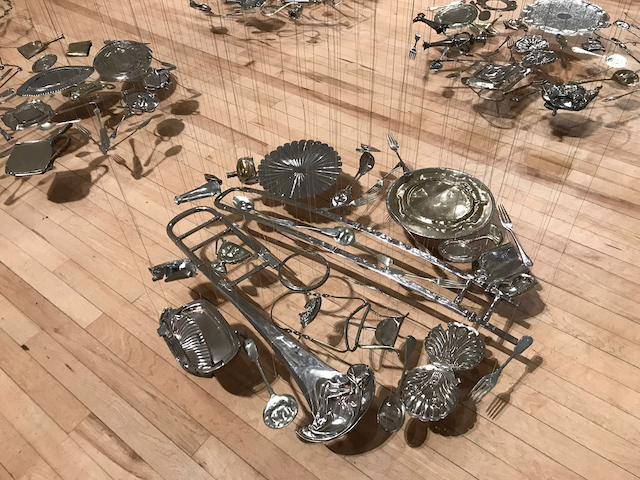
The first room was “Thirty pieces of silver”. This was made by running a steam roller over a collection of silverware then taking the pieces and suspending them so they hang just above the floor. It was really incredible. It was very still, apart from the occasional piece which was swinging slightly and the very occasional tinkling as pieces hit each other. Not sure if it was building movement or just movement of the air as people wandered around that set off the motion. You could also imagine the clatter if the stings were suddenly cut and everything hit the floor.
Some pieces were obviously flattened, bowls and a trombone. Other pieces, cutlery in particular, looked barely affected by the steam rollering.

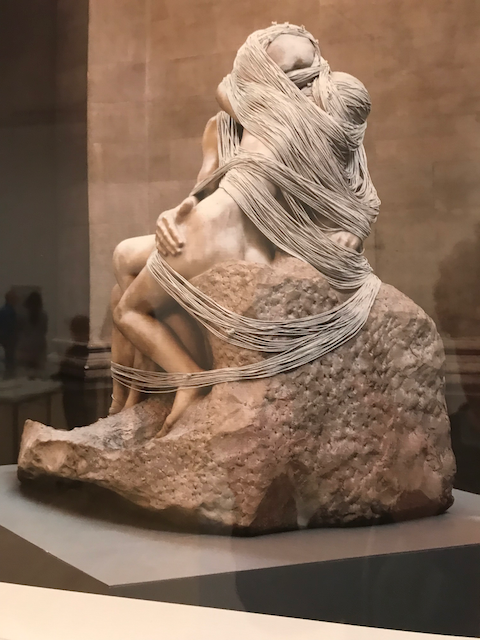
In the next room, the thing that grabbed me in particular was a somewhat plain looking ball of string. Nearby there was a photo which explained things. The piece had originally been the string wrapped around Rodin’s “The Kiss”. Interesting in itself, kind of looks like long spaghetti, this fluid almost organic stuff wrapped around, almost obscuring the kiss. However, the piece had been vandalised and the string cut into pieces. Parker had put it back together by tying the pieces, hence the knots in the ball, and then wrapping it into a ball with a “secret weapon” inside. As lots of Parker’s work is about cutting, tearing or exploding things, it was interesting that someone else had enacted the violence.

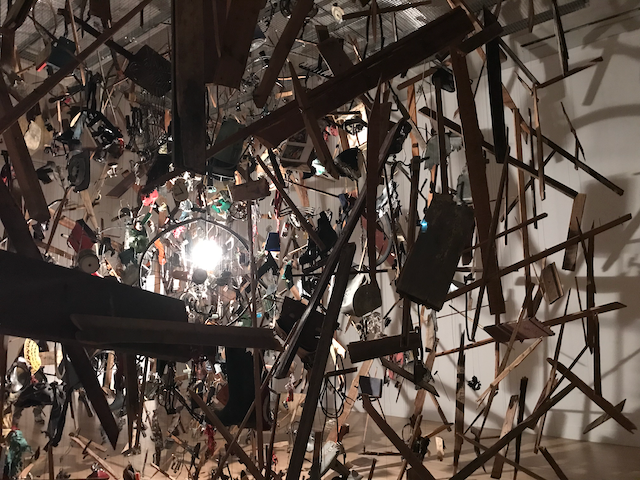


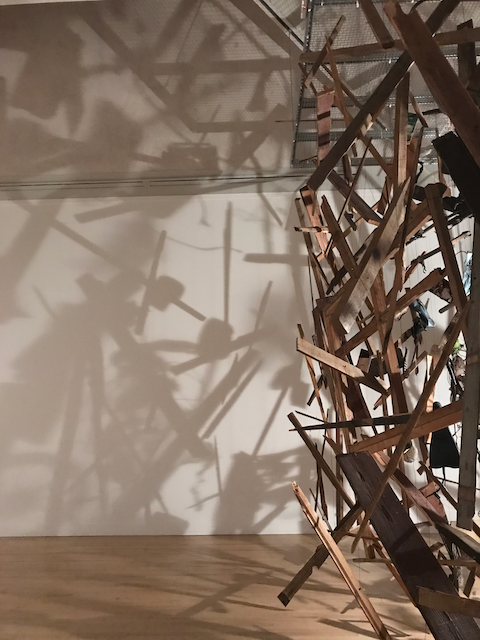
Next was the iconic “exploded shed”. It was absolutely amazing to see in person. Fortunately there weren’t many people in the gallery so it was great to just stand in the room and take it in. One of the most amazing things is the shadows that it throws on the walls. That would be impossible to appreciate if the room was packed. You can look at it as something that’s exploding…or something that’s coming back together. Spotting the familiar “shed” objects, a beach windbreak, bucket for making sandcastles, bikes…although a hot water bottle felt like a bit of an oddity for a shed. Like the flattened silverware, some items had been torn apart by the explosion but others were relatively unscathed. It was easy to spend a long time in various parts of the room.
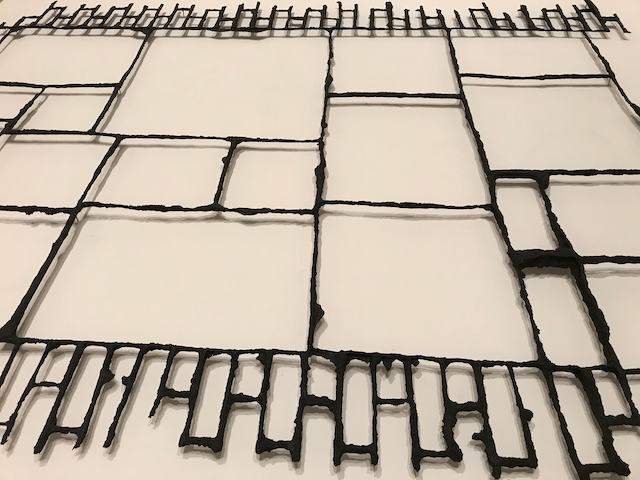
In the next room the thing that I particularly liked was this. At first I thought it was some sort of fencing but it’s actually a cast of paving stones. Parker poured rubber around some paving stones and then made a cast. Again, it’s hovering just above the ground. Not sure why this grabbed me so much. Maybe because I love different types of paving, I often take pictures of interesting paving, flagstones, brick pavers etc. In this, the stones aren’t present at all, just the memory of them.


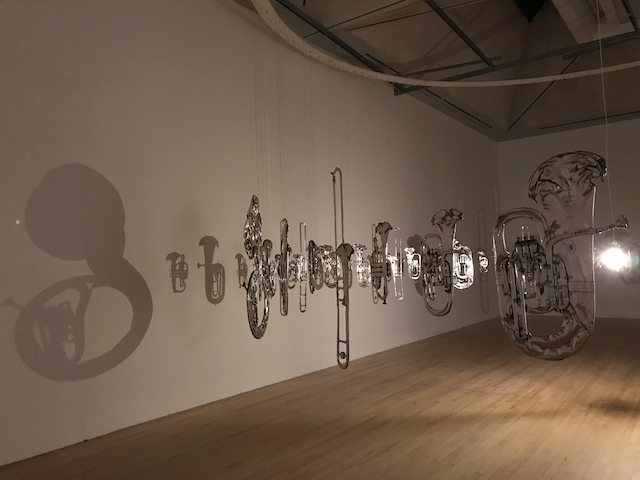
Next up, a room of flattened brass instruments. All suspended in a circle, all pointing upwards, all casting amazing shadows on the wall. This time everything looked flattened….like they’d all had the breath squeezed out of them.
Next was the bit I may have enjoyed most…but I don’t have any pictures. It was a series of films. I often end up skipping the films in exhibitions, unless they’re very short. But these were incredible and I found myself staying to watch them all. The one that has stuck with me is “Thatcher’s Finger”. A really clever and quite disturbing play with the shadows cast by Margaret Thatcher’s “pointy” statue in the Houses of Parliament. Incredibly sinister and creepy and pretty mesmeric for someone like me who grew up with Thatcher.
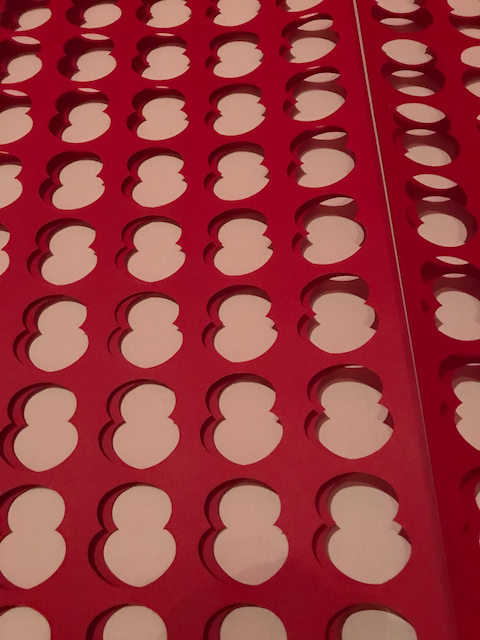
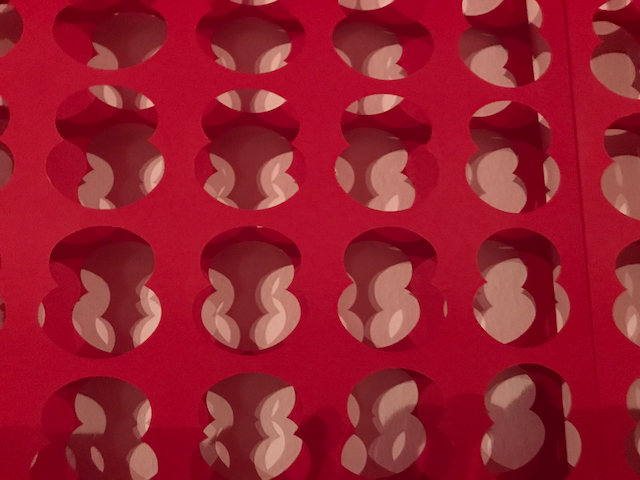
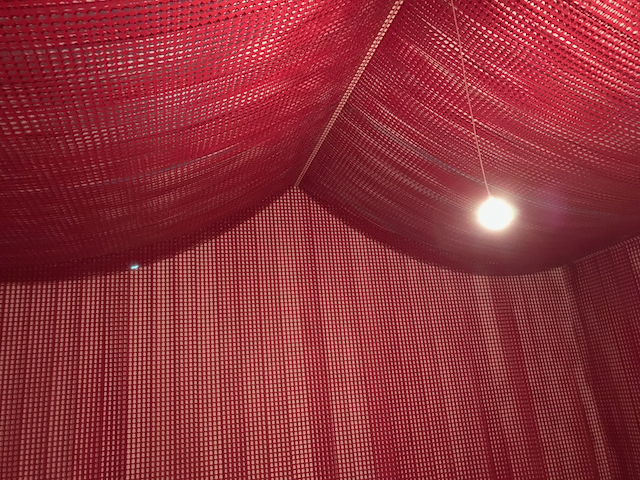
War Room was a large room lined with the offcuts of material left from making commemorative poppies. It was a very large empty room but the fabric deadened all sound and made it feel really oppressive. One of the films in the previous rooms had focussed on the machinery making the poppies. The mass production mirroring the sheer numbers involved in wars.

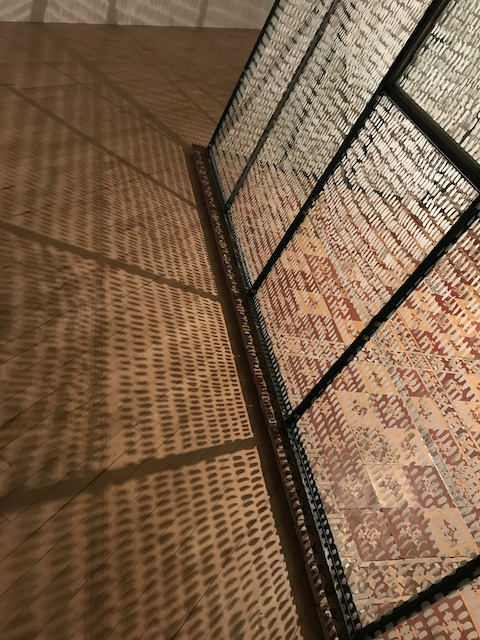
The last room was a greenhouse, painted with chalk from the white cliffs of Dover. This cast wonderful shadows on the walls as the light inside pulsated. The tiles in the greenhouse were taken from parliament…worn by the feet of ministers.
 Tartantastic
Leave a comment