
Day 3 of MoodleMoot started with a last early morning walk along the south bank of the Thames. I was just in time for the morning keynote talk by Fiona Strawbridge from UCL.
Fiona told the story of both her, and UCL’s e-learning journey over the past 10 plus years. It was a story that definitely had lots of resonance for me, and perhaps does for lots of others who work in similar institutions.
- E-Learning teams growing and moving from generalist to more specialist roles. Although I’m guessing that many institutions are still in the position of having a small number of learning technologist type roles in which case these people may still find themselves having to work in many areas from answering help desk tickets, running the services, writing user documentation, delivering training etc.
- MOOCs driving conversations about e-learning up the agenda.
I then moved to the “Research” session:
- Jess Gramp from UCL spoke about their work on “My Feedback” which they have been piloting recently. Our Gradesplus work is similar to this although it has taken a slightly different approach. It turned out that Strathclyde are also doing something similar. The results from the UCL pilot so far are interesting. Also the features that are being requested are also very similar to the features we’d like to see included in future versions of Gradesplus.
- Gavin Henrick from Moodle HQ then discussed Moodle as a MOOC platform. As throughout the Moot, Gavin caused a bit of a stir by using the Moodle Mobile app as an audience voting system! He made a particularly interesting comment about MOOCs being a place to try innovative approaches to teaching and an exercise in marketing.
- Michael de Raadt from Moodle HQ, presented the results of a survey of the use of Moodle plugins across the community. The results of this survey are being used to make decisions about support. The survey was heavily weighted towards HE but even then I was suprised at the apparent reliance on manual authentication and manual enrolment methods. Otherwise I don’t think there were any particular surprises in terms of what people make use of.
The next session was titled “Workplace”:
- I came in slightly late on the first presentation which was on the use of Badges. Someone had commented on Twitter that there had been very little said about Badges at the Moot and I wonder if this was down to what I perceived as an HE bias. Badges seem to have gained more traction in FE and in workplace learning. One of the obstacles cited was the technical difficulties involved in sharing badges which is definitely something I’ve experienced. It also seemed a little strange to have come for a session about plugins in which one of the most used plugins is the “Certificate” yet badges don’t seem to have taken off. Why would people be happy to have a certificate but not a badge?
- Rx Islam from Floream then spoke about things she’s been involved with recently which use core Moodle tools such as discussion forums. After going to a lot of talks which focussed on adding to Moodle with custom developments and plugins, it was actually good to be reminded that there are lots of things that can be done with the core Moodle tool set and some solid learning design.
- Last up was Mary Cooch (aka moodlefairy) who gave a very entertaining talk (with rather a lot of double entendres) about screencasting. While not really particularly Moodle focussed, it made me think about our own instructional screencasting and how we could improve it. Mary also gave me my first picture of a cat of the Moot which on day 3 is pretty good going.
After lunch it was on to an “Instructional Design” session:
- Sam Taylor and Aurélie Owens from Cranfield talked about using a Moodle course and badges to induct students into their use of Turnitin.
- Michael Hughes from Strathclyde spoke about making Moodle more student centric and raised some interesting points about focussing on the student experience of Moodle. He raised the point about Moodle becoming a default portal. Something that we have experienced. In the absence of a “proper” student portal, Moodle often seems to become the de facto student portal. In my experience this means that it can start to be bent to purposes it was never intended for.
- There were a couple of talks, one by Glasgow University and one by Edinburgh Napier which focussed on distance/online learning. Both institutions have embarked on distance learning programmes and spoke about their experiences. One thing that struck me about both institutions was the rapid increase in student numbers over a fairly short period of time.
The next session was on “Training”:
- Glasgow University were back again (after the last session) to discuss the challenges that were involved in getting staff ready to teach online. It was interesting that the Open University had presented a lot at this Moot, with their obvious expertise in distance learning and then to hear from institutions who have not traditionally been in this space.
- Domi Sinclair from UCL then discussed how to make staff training more self-service. Her particular focus was on user guides and issues around how much effort should be put in to these. Should we rely more on the documentation available on moodle.org instead of writing our own?
Gavin Hendrick then brought us together for the very last keynote of the Moot. The main topics of his talk for me were the emphasis on the continued development of the Moodle mobile app. Definitely something we want to look at. The second highlight was the new Moodle Academy MOOC platform coming soon. You definitely can run a MOOC on a Moodle.
And then it was all over…three days of intense Moodle focussed activity was at an end.
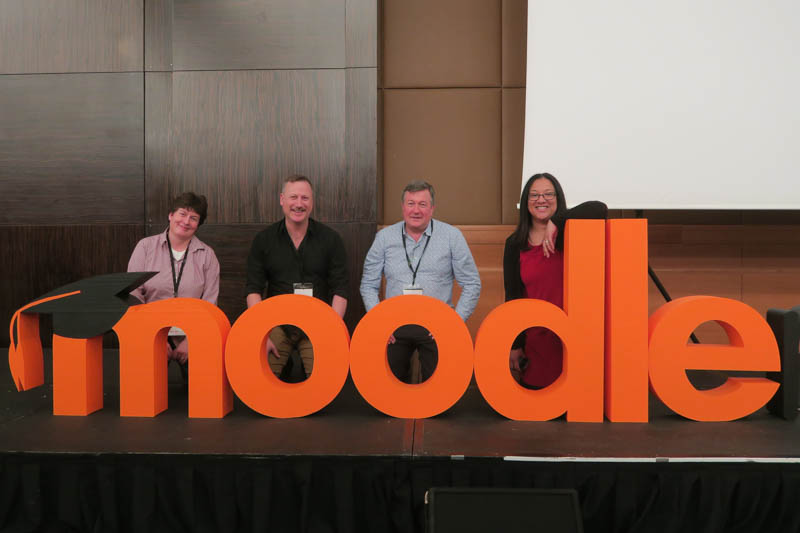
 Tartantastic
Leave a comment